
Magazine Designing in Sialkot
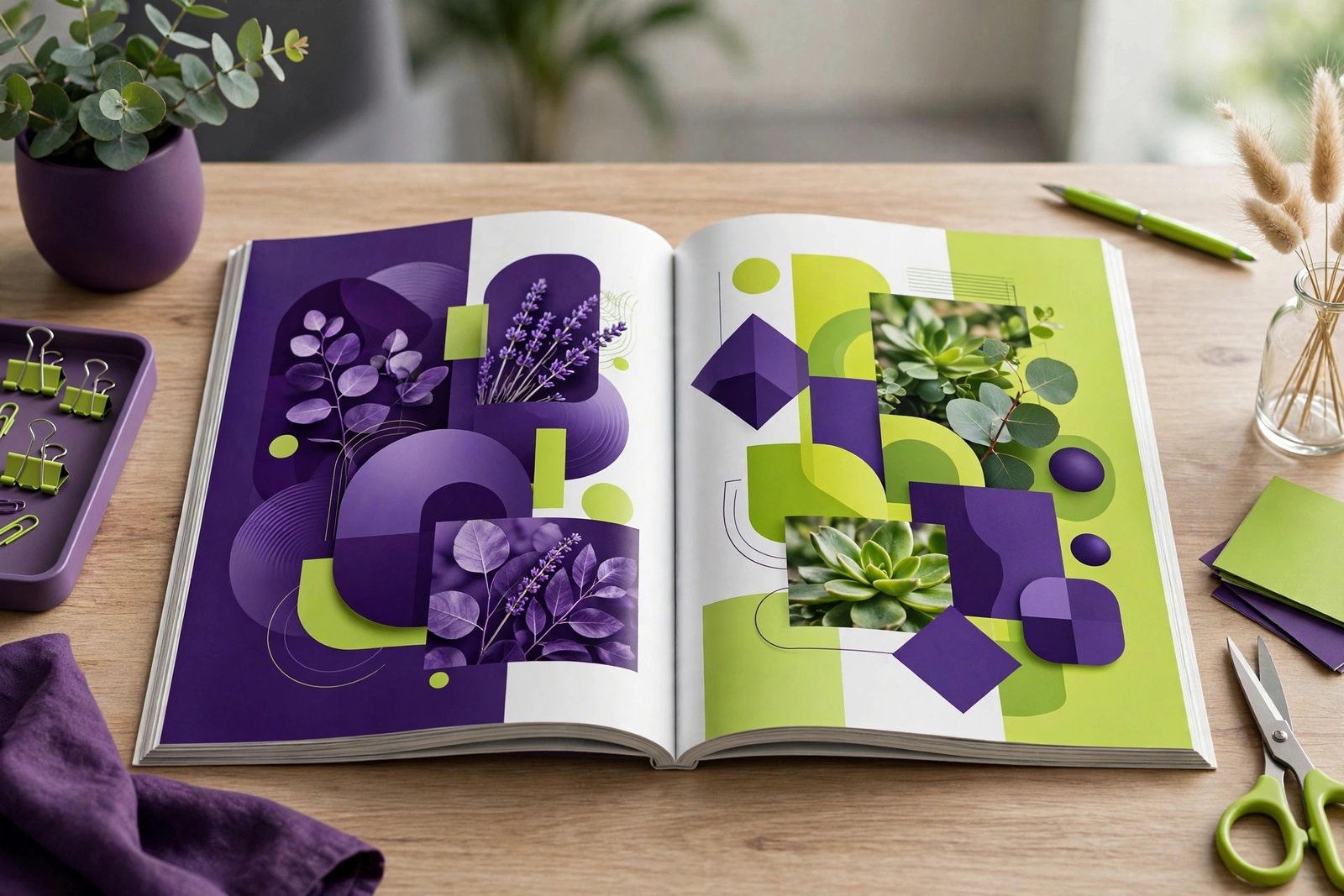
A magazine is more than printed pages. It is an experience. When someone picks up a well-designed magazine, they feel the quality before reading a single word — the cover catches their eye, the pages turn smoothly, the layouts invite them in. A poorly designed magazine does the opposite: dense walls of text, random images, no clear structure. Most readers give it ten seconds before putting it down.
Businesses, schools, and organizations in Sialkot publish magazines for many reasons: corporate magazines that build brand image, school magazines that capture a year of memories, product magazines that showcase a range, event souvenirs that commemorate special occasions. Whatever the purpose, the design decides whether people actually read it or just glance and forget.
At Advert Solutions, we design magazines with organized content, attractive visuals, and consistent branding from the first page to the last. In this comprehensive guide, we will explain why magazine design matters so much, which types of magazines we create, how our design process works, what makes a great magazine page, which mistakes to avoid, and what professional magazine design costs in Sialkot. Whether you are publishing your first magazine or redesigning an existing one, this guide will help you make better decisions at every step.
Why Magazine Design Matters More Than You Think
People often think a magazine is about content — the articles, the photos, the information. Content matters, of course. But design is what gets the content read. Study after study shows that readers judge publications by their design within seconds, and that judgment decides whether they keep reading. Let us look at why magazine design deserves serious attention.
Design decides whether your magazine gets read. This is the fundamental truth. You can have the best articles in the world, but if the pages are dense, cluttered, and hard to navigate, readers will not engage. Good magazine design — clear headlines, inviting layouts, well-placed images, comfortable text columns — pulls readers in and carries them through the pages. Design is not decoration on top of content; it is the vehicle that delivers content to the reader.
Your magazine represents your organization. A corporate magazine is often the most substantial piece of print a company produces. It sits on reception tables, gets handed to clients, and gets mailed to partners. Its design speaks for your brand with every page. A polished, professional magazine tells readers your organization is serious and capable. A sloppy one quietly suggests the opposite. For schools, the annual magazine represents the institution to parents and the community — it should reflect the quality of the education inside.
Good structure helps readers navigate. A magazine without clear structure is frustrating. Readers should be able to find sections easily, understand what each article is about from its headline and introduction, and move through the magazine without getting lost. Professional design creates this navigation through consistent section headers, a clear table of contents, page numbers that are easy to find, and visual cues that tell readers where they are. We plan this structure before designing a single page.
Visual hierarchy guides the eye. On every magazine page, some things matter more than others. The headline matters more than the body text. The main photo matters more than the caption. Good design uses size, weight, color, and spacing to show readers what to look at first, second, and third. Without this hierarchy, every page looks equally important — which means nothing feels important. We build clear visual hierarchy into every spread we design.
Consistency builds trust and polish. When every page follows the same design system — same fonts, same colors, same style of headlines, same treatment of photos — the magazine feels professional and trustworthy. Inconsistent design, where each page looks like it was made by a different person, feels amateur. Consistency does not mean boring; it means every page feels like part of one beautiful publication.
Magazines have a long shelf life. Unlike a flyer that gets thrown away, a good magazine gets kept. Corporate magazines sit in offices for months. School magazines are treasured for years. Event souvenirs become family keepsakes. This long life means your design investment keeps working far longer than most marketing material. A magazine designed well today still represents you beautifully a year from now.
Print quality and design go together. A beautiful design on poor paper still disappoints. We advise on paper selection, binding options, and finishes so the physical magazine matches the quality of the design. Glossy pages for photo-heavy magazines, matte for elegant corporate publications, perfect binding for thicker issues — these choices affect how readers perceive your magazine.
Digital versions extend your reach. Most magazines today also need a digital version — a PDF for email, a flipbook for the website, or images for social media. We prepare digital versions alongside the print design so your magazine reaches readers wherever they are. A school magazine shared as a digital flipbook, for example, reaches alumni and parents who live far away.
The bottom line: your magazine's design is not a finishing touch. It is a core part of whether your publication succeeds. Invest in it accordingly.
Types of Magazines We Design
Different magazines serve different purposes, and each type needs its own design approach. Here are the main types of magazines we design for clients in Sialkot.
Corporate and company magazines. Published by businesses to share news, achievements, employee stories, and industry insights. These magazines build brand image and keep stakeholders engaged. Corporate magazine design must reflect the company's brand identity — colors, typography, tone — on every page. We design corporate magazines for manufacturers, exporters, and service companies in Sialkot, often as quarterly or annual publications. Many of our corporate clients pair their magazine with a matching company profile so all their corporate publications share one professional identity.
School and college magazines. Annual publications capturing a year of academic life: principal's message, student articles, poetry, artwork, sports coverage, event photos, and farewell sections. School magazines are keepsakes — students keep them for decades. The design should feel youthful and celebratory while staying organized. We handle large volumes of mixed content — text in Urdu and English, photos of varying quality, artwork from students — and turn it into a beautiful, coherent magazine. This is one of our most rewarding project types.
Product and catalogue magazines. Some businesses present their product range as a magazine rather than a plain catalogue — with lifestyle photography, feature articles about products, and an editorial feel. This approach works well for fashion, furniture, and lifestyle brands. The magazine format makes products feel desirable rather than just listed. We design these with the visual richness of a consumer magazine and the product detail of a catalogue. For pure product listings, our catalogue design service may be more suitable — we will advise you honestly on which format fits your needs.
Real estate and project magazines. Housing societies and developers use magazines to showcase projects: site photos, floor plans, location maps, payment plans, and lifestyle imagery. These need a premium feel — buyers are making huge decisions, and the magazine must inspire confidence. We design real estate magazines with large, impressive visuals and clear information layouts.
Healthcare and hospital magazines. Hospitals and clinics publish magazines with health articles, doctor profiles, facility tours, and patient stories. The design must feel clean, trustworthy, and caring. We use calm colors, clear typography, and organized layouts that make medical information approachable.
Event souvenir magazines. Weddings, anniversaries, religious gatherings, and organizational milestones sometimes get commemorative magazines — photo collections, messages from family and friends, event programs. These are deeply personal publications. We design them with elegance and care, because they become family treasures.
Community and organization magazines. Trade associations, chambers of commerce, clubs, and NGOs publish magazines for their members: news, member spotlights, event coverage, and announcements. The Sialkot Chamber of Commerce community, for example, has many such organizations. We design these with a professional yet approachable feel.
Digital magazines and flipbooks. Publications designed primarily for screens — distributed as PDFs, hosted as online flipbooks, or published as digital editions. Digital magazines need screen-optimized layouts: larger text, horizontal-friendly spreads, and interactive-friendly structure. We design digital-first magazines alongside print versions when clients need both.
Whatever type of magazine you are publishing, the principles are the same: organized content, attractive visuals, consistent branding. We adapt these principles to your specific publication and audience.
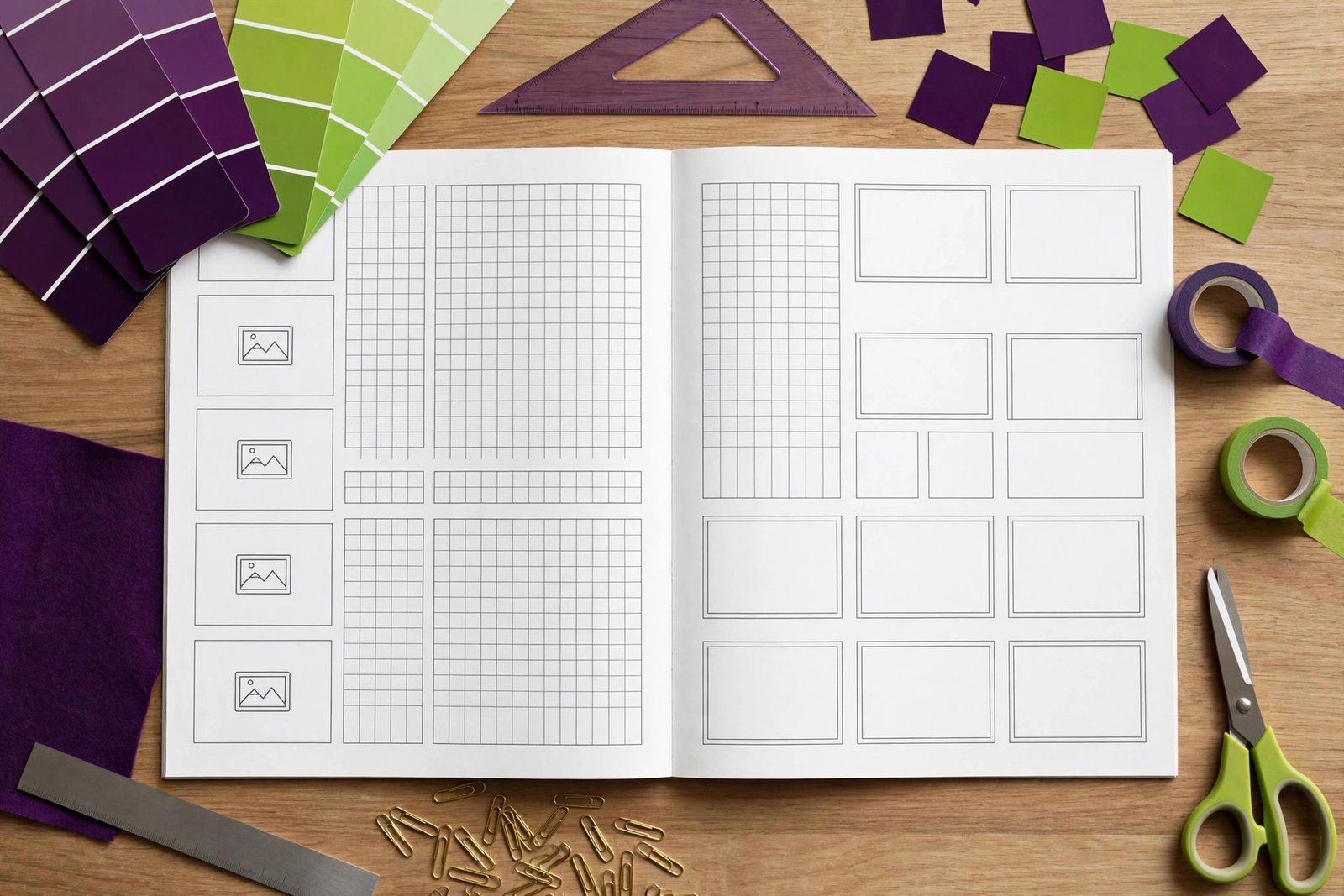
Our Magazine Design Process, Step by Step
Designing a magazine is a bigger project than most print work — dozens of pages, mixed content, many contributors. Our step-by-step process keeps it organized and stress-free. Here is exactly how it works.
Step 1: Planning and content inventory. We start by understanding the full scope. How many pages? What sections? What content do you have — articles, photos, advertisements? What is still missing? We create a flat plan: a page-by-page map of the entire magazine. This plan is the foundation of everything. It tells us how much space each section gets and ensures nothing is forgotten. For a 60-page school magazine, for example, the flat plan allocates pages for the principal's message, each class section, sports, events, and advertisements.
Step 2: Defining the design system. Before designing pages, we establish the visual identity of the magazine: the cover style, headline fonts, body text fonts, color palette, photo treatment, and recurring elements like section dividers and pull-quote styles. We present this as sample spreads — two or three designed pages showing the look. You approve the direction before we design the full magazine. This step prevents expensive rework later.
Step 3: Content collection and organization. You send us all content: articles as text files, photos as high-quality images, advertisements with their specifications. We organize everything by section according to the flat plan. If content arrives in mixed formats — WhatsApp messages, handwritten notes, Word files — we sort it out. We also flag gaps: sections with no content, photos too small for print, articles that need editing. Better to catch these early than during final layout.
Step 4: Page-by-page layout. This is the core design work. We lay out every page: flowing text into columns, placing photos, designing headlines and captions, creating sidebars and infographics. Each spread is designed individually while following the approved design system. A 60-page magazine means 30 spreads, each crafted with care. This phase takes the most time — typically one to two weeks depending on page count.
Step 5: Photo editing and enhancement. Magazine photos come from many sources with varying quality. We perform basic enhancement on all images: brightness, contrast, color correction, and cropping. Photos that are too low-resolution for print get flagged — we would rather tell you honestly than print a blurry photo. For key images like covers, we do more detailed retouching.
Step 6: First full proof. We share the complete magazine as a digital proof — every page in order. You review everything: text accuracy, photo placement, headlines, page numbers, advertisements. This is the big review. We recommend having two or three people check different aspects: one for text errors, one for photos, one for overall flow.
Step 7: Revisions. Based on your feedback, we revise. Text corrections, photo swaps, layout adjustments. Most magazines go through two to three revision rounds. We track every change request to make sure nothing is missed.
Step 8: Final proof and print preparation. After revisions, we do a final quality check: page numbers in sequence, consistent headers, correct ad placements, print-safe colors, proper bleed on every page. Then we prepare the print-ready files — high-resolution PDFs set up for your printer's specifications.
Step 9: Printing guidance. We advise on paper stock, binding method, and finishes. For most magazines, we recommend specific paper weights for the cover versus inside pages, and we explain binding options: saddle-stitch for thinner magazines, perfect binding for thicker ones. We can also review printer proofs if your printer provides them.
Step 10: Digital version. Finally, we prepare the digital version: an optimized PDF for email and web, sized for fast loading while keeping quality high. If you want a flipbook version for your website, we prepare the files for that too.
A typical 40 to 60 page magazine takes 3 to 5 weeks from content handover to final files. Larger magazines take longer. We give you a realistic timeline at the start and keep you updated at every stage.
Anatomy of a Great Magazine Page
What actually makes a magazine page work? Let us break down the key elements we design on every page, so you understand the craft behind professional magazine design.
The cover. The cover sells the magazine. It needs a striking main image, a clear masthead (the magazine title), and cover lines that tease the best content inside — without clutter. We design covers with strong focal points and clean typography. A common mistake is cramming too many cover lines; we select the three or four most compelling stories and give them room to breathe.
The table of contents. More important than people think. A well-designed contents page with small thumbnail images helps readers discover articles they might otherwise miss. We make it scannable and inviting, not just a list.
Feature spreads. The main articles get feature treatment: large opening photos, dramatic headlines, elegant drop caps, and generous white space. The opening spread of a feature article sets the tone — it should make readers want to continue. We design these as the visual highlights of the magazine.
Headlines and standfirsts. Every article needs a headline that captures attention and a standfirst (the short summary under the headline) that draws readers in. We style these distinctly from body text so the page has clear entry points.
Body text columns. Readability is everything. We set body text in comfortable column widths — not too wide, not too narrow — with proper line spacing and alignment. For Urdu text, we use appropriate fonts and right-to-left flow. Good typography is invisible: readers notice it only when it is wrong.
Pull quotes. Short, striking quotes pulled from the article and displayed large. They break up text-heavy pages and give scanners a reason to stop and read. We place pull quotes strategically to maintain visual rhythm.
Captions. Every photo needs a caption. Readers read captions — often before the article itself. We style captions clearly and keep them informative but brief.
Sidebars and boxes. Related information — facts, timelines, tips, profiles — presented in designed boxes alongside the main article. Sidebars add value without interrupting the article flow. We design them to stand out visually while matching the magazine's style.
Section dividers. Full-page or half-page dividers that mark transitions between sections. They give readers a visual breather and make the magazine feel organized. We design these as beautiful moments in the publication.
Advertisements. Ads must be clearly separated from editorial content but still feel part of the magazine. We place ads according to the flat plan, ensuring they do not disrupt article flow, and we check that ad designs meet print specifications.
Page furniture. The small recurring elements: page numbers, section headers, running footers. These seem minor, but consistent, well-designed page furniture is what makes a magazine feel professional. We never neglect them.
When all these elements work together — each designed with care and all following one system — the result is a magazine that feels effortless to read. That effortlessness is the product of very deliberate design.
Real Examples: Magazines We Design in Sialkot
Here are typical magazine projects we handle, showing how professional design serves different purposes.
The exporter's corporate magazine. A sports goods manufacturer wanted a quarterly magazine for buyers and partners: factory news, new product highlights, employee stories, and industry insights. We designed a clean, premium publication in their brand colors with strong photography and organized sections. They now send it to buyers worldwide, and it has become a key part of their brand image. Buyers mention it in meetings — it keeps the company top of mind between orders.
The school's annual magazine. A Sialkot school with 80 pages of mixed content: messages from management, hundreds of student photos, articles in Urdu and English, poetry, artwork, and sports coverage. The challenge was organizing chaos into beauty. We created a clear section structure, designed consistent templates for recurring content like class photos, and gave feature articles special treatment. The printed magazine was a hit with parents and students — many families called it the best edition the school had produced.
The housing society's project magazine. A developer launching a new housing project needed a magazine-style brochure: project vision, location advantages, floor plans, payment plans, and lifestyle imagery. We designed it as a premium magazine rather than a flat brochure — with feature-style spreads that made the project feel aspirational. The magazine became their primary sales tool at the booking office.
The hospital's health magazine. A hospital wanted a quarterly health magazine for patients and the community: doctor profiles, health tips, facility updates, and patient stories. We designed it with a clean, caring aesthetic — calm colors, readable typography, friendly layouts. The magazine now sits in waiting areas and gets taken home by patients, extending the hospital's reach.
The trade association's member magazine. A business association needed a professional member magazine: industry news, member spotlights, event coverage. We designed a structured, credible publication that members are proud to be featured in. Being featured in a well-designed magazine feels like an honor; in a poorly designed one, it feels like a chore. Design affects participation.
Each of these magazines serves a different goal, but all benefit from the same foundation: organized content, attractive visuals, and consistent branding.
Common Magazine Design Mistakes to Avoid
Magazine design has many moving parts, and mistakes compound across dozens of pages. Here are the most common ones we see — and how to avoid them.
Mistake 1: No flat plan. Starting layout without a page-by-page plan leads to chaos: sections in the wrong order, missing pages, ads colliding with articles. We always create a flat plan first. It is the blueprint of the magazine.
Mistake 2: Inconsistent design across pages. When different people design different sections — or when there is no design system — the magazine looks fragmented. Every page should feel like part of the same publication. Our design system, approved before full layout begins, prevents this.
Mistake 3: Text-heavy pages with no visual breaks. Pages of unbroken text intimidate readers. Every spread needs visual entry points: photos, pull quotes, sidebars, subheadings. We design rhythm into every section.
Mistake 4: Poor photo quality. Blurry, dark, or tiny photos ruin otherwise good layouts. We check every image for print quality and flag problems early. It is better to use fewer, better photos than to fill pages with poor ones.
Mistake 5: Ignoring the gutter. The gutter is the center of a spread where pages meet. Text or important image details placed in the gutter disappear into the binding. We keep critical content clear of the gutter on every spread.
Mistake 6: Weak cover. A cluttered or dull cover kills interest before the magazine is opened. The cover deserves special design attention — it is the magazine's most important page.
Mistake 7: No proofreading. Typos in a printed magazine are permanent and embarrassing. We recommend multiple proofreading rounds by different people. We check layout and design; you must verify text accuracy.
Mistake 8: Wrong paper or binding. A thick magazine with saddle-stitch binding will not lie flat and pages may fall out. Thin paper shows print-through. We advise on the right paper and binding for your page count and budget.
Mistake 9: Starting too late. Magazines take weeks. Content collection alone often takes longer than expected — contributors miss deadlines, photos arrive late. Start the project early and set internal deadlines for content delivery.
Mistake 10: Forgetting the digital version. Designing only for print and ignoring digital distribution wastes reach. We prepare digital versions as part of every project.
Avoiding these mistakes requires experience with real magazine production — which is exactly what we bring to every project.
What to Check Before Hiring a Magazine Designer
Magazine design is a specialized skill. Before hiring someone, verify these points:
- Ask to see complete magazines, not just pages. A single beautiful page is easy; a coherent 60-page magazine is hard. Ask to see full publications the designer has completed.
- Check multi-page consistency. Flip through their past work. Does every page feel like part of one magazine? Or does the style drift?
- Confirm they understand print production. Bleed, CMYK, binding, paper — magazine designers must know print deeply. Ask how they prepare files for the printer.
- Ask about Urdu typography. If your magazine has Urdu content, the designer must handle Urdu fonts, right-to-left text flow, and mixed-language layouts professionally.
- Discuss content management. How will they handle your scattered content? A good magazine designer has a system for organizing articles, photos, and ads.
- Check the revision process. Magazines need multiple review rounds. Confirm how revisions work and what is included.
- Ask about timelines. Get a realistic schedule with milestones: flat plan date, first proof date, final files date.
- Confirm digital deliverables. Make sure web-optimized PDFs or flipbook files are included, not just print files.
Magazine design is a significant investment. The right designer makes it smooth and the result beautiful. The wrong one makes it painful and the result disappointing. Choose carefully.
Print vs Digital Magazines: Choosing the Right Format
Should your magazine be printed, digital, or both? Each format has real strengths, and the right choice depends on your audience and your goals.
Printed magazines: tangible and prestigious. A physical magazine feels important. Readers spend more time with print — they flip through pages, they notice details, they keep the issue. For corporate magazines handed to clients, school magazines treasured by families, and souvenir publications, print carries emotional weight that screens cannot match. Print also works where internet access is limited or where your audience prefers physical reading. The downsides are cost and distribution: printing and delivering hundreds of copies takes budget and logistics.
Digital magazines: wide reach and low cost. A digital magazine — PDF, flipbook, or online edition — reaches anyone with a phone. Distribution costs almost nothing. You can share it on WhatsApp, email it to thousands, and host it on your website forever. Digital is perfect for alumni networks, distant stakeholders, and online audiences. The downside: digital readers skim more and engage less deeply than print readers, and your magazine competes with every notification on their phone.
The combination most clients choose. Print a focused run for the people who matter most — key clients, school families, event guests — and distribute a digital version to everyone else. This gives you the prestige of print where it counts and the reach of digital everywhere else. We design both versions from the same source files, so the cost of adding digital to a print project is modest.
Our recommendation. If your magazine is a keepsake — school annual, wedding souvenir, milestone publication — print is essential. If it is informational — member updates, newsletters, product news — digital may be enough, with a small print run for VIPs. When in doubt, ask us: we will recommend honestly based on your audience, not on what costs more.
Magazine Design Pricing in Sialkot
We do not publish fixed prices, and we want to explain why honestly. Magazine projects vary enormously: a 24-page corporate magazine is a completely different project from a 100-page school magazine with hundreds of photos. A fixed price would be meaningless.
Here is what actually determines the cost:
- Number of pages. The biggest factor. More pages mean more layout work. A 32-page magazine costs significantly less than an 80-page one.
- Content complexity. Clean, organized content is fast to lay out. Scattered, incomplete content that needs organizing, editing, and chasing takes much longer.
- Photo volume and quality. Magazines with hundreds of photos need more editing and placement work. Poor-quality photos that need heavy fixing add time.
- Design complexity. A clean corporate magazine is faster than a highly illustrative, artistic publication with custom graphics on every page.
- Languages. Bilingual Urdu-English magazines need more typographic care than single-language ones.
- Cover design. Custom cover concepts with special treatments take dedicated design time beyond inside pages.
- Revisions. Standard revision rounds are included. Extensive restructuring after layout adds cost.
- Digital versions. Print plus digital flipbook versions involve additional preparation.
To give you a rough sense: short corporate magazines of 20 to 32 pages are the most accessible projects. Standard school or organizational magazines of 48 to 80 pages are mid-range investments. Large, premium magazines of 80+ pages with heavy photo editing and custom illustrations are significant projects priced accordingly.
What we guarantee is transparent pricing. Before work begins, you receive a detailed written quote based on your page count, content situation, and requirements. No hidden charges. If the scope changes during the project — for example, you add 20 pages — we discuss the adjustment openly before proceeding.
One honest perspective: a magazine represents your organization for years. The per-reader cost of good design is tiny when spread across every person who picks up your magazine over its lifetime. Cutting corners on magazine design is one of the most visible places to save money — and one of the worst.
For related publications, we also design annual reports in Sialkot with the same care for long-form layout and data presentation. Want an exact price for your magazine? Contact us for a free quote or call +92 371 4200173. Tell us your page count, your content situation, and your timeline. We will reply with a clear, detailed quote — free, with no obligation.
Frequently Asked Questions
How long does it take to design a magazine?
A 24 to 32 page magazine typically takes 2 to 3 weeks from content handover to final files. A 48 to 80 page magazine takes 3 to 5 weeks. Larger publications take longer. The timeline depends heavily on how organized your content is when you hand it over, and how quickly you provide feedback on proofs. Content collection — getting articles and photos from contributors — often takes longer than the design itself, so start gathering content early.
What do you need from me to start?
We need your content: articles as text, photos as high-quality images, your logo and brand colors, and any advertisements with their specifications. A rough page plan or section list helps too. Do not worry if everything is not perfect — we organize scattered content as part of our process. The one thing we cannot work without is the actual content; design cannot replace missing articles or photos.
Can you design magazines in Urdu?
Yes. We design magazines in English, Urdu, or both. School magazines in Sialkot are often bilingual, with some sections in each language. We handle Urdu typography professionally — proper fonts, right-to-left text flow, and clean mixed-language layouts where Urdu and English appear together.
Do you also print the magazines?
We deliver print-ready files prepared to your printer's specifications. We also advise on paper selection, binding methods, and finishes, and we can review printer proofs. We work with any standard printing press — if you have a preferred printer in Sialkot, we prepare files exactly to their requirements.
Can you redesign our existing magazine?
Yes. Many clients come to us with an existing magazine that looks dated. We keep what works — your sections, your content approach — and rebuild the design system: fresh layouts, modern typography, better photo treatment, consistent branding. A redesign can transform how readers perceive your publication without changing its character.
How do you handle hundreds of photos?
Systematically. We organize photos by section, check each one for print quality, perform basic enhancement on all of them, and flag any that are too low-resolution to print well. For recurring content like class photos or team pictures, we design consistent templates that make large photo sets look organized rather than chaotic.
Will I get a digital version for the website?
Yes. Every magazine project includes a web-optimized digital version — a PDF sized for fast loading and easy sharing. If you want an interactive flipbook for your website, we prepare the files for that as well. Digital versions are essential for reaching readers who will never hold the printed copy.
How many revisions are included?
We include reasonable revision rounds in every project — typically two to three full proof reviews. You check text, photos, and layouts; we make the corrections. We track every change request so nothing gets missed. Major structural changes after layout is complete — like adding entire new sections — are quoted separately and honestly.
Can you design advertisements within the magazine?
Yes. If your magazine includes advertisements, we can design the ads themselves or place advertiser-supplied designs according to the flat plan. We check that all ads meet print specifications and sit correctly within the magazine's flow without disrupting articles.
Do you work with clients outside Sialkot?
Yes. We design magazines for schools, companies, and organizations across Pakistan. The entire process — planning, design, proofs, revisions, and file delivery — happens online. Your location does not affect the quality of the work or the smoothness of the process.
Publish a Magazine Worth Reading
A magazine is a statement. It says your organization has something worth saying — and cares enough to say it beautifully. Whether you are publishing a corporate magazine, a school annual, a product showcase, or a commemorative souvenir, professional design is what turns your content into a publication people actually read, keep, and remember.
At Advert Solutions, we bring real magazine production experience to every project: flat planning, design systems, typography in two languages, photo management, print preparation, and digital versions. We handle the complexity so you can focus on your content.
Ready to publish? Get a free quote today or call us at +92 371 4200173. Tell us about your magazine — the type, the page count, and your timeline — and we will design a publication you will be proud of.
We do this for businesses.
Get a free consultation — we'll map the fastest path for you.