
Label Design in Sialkot: Product Labels That Build Your Brand
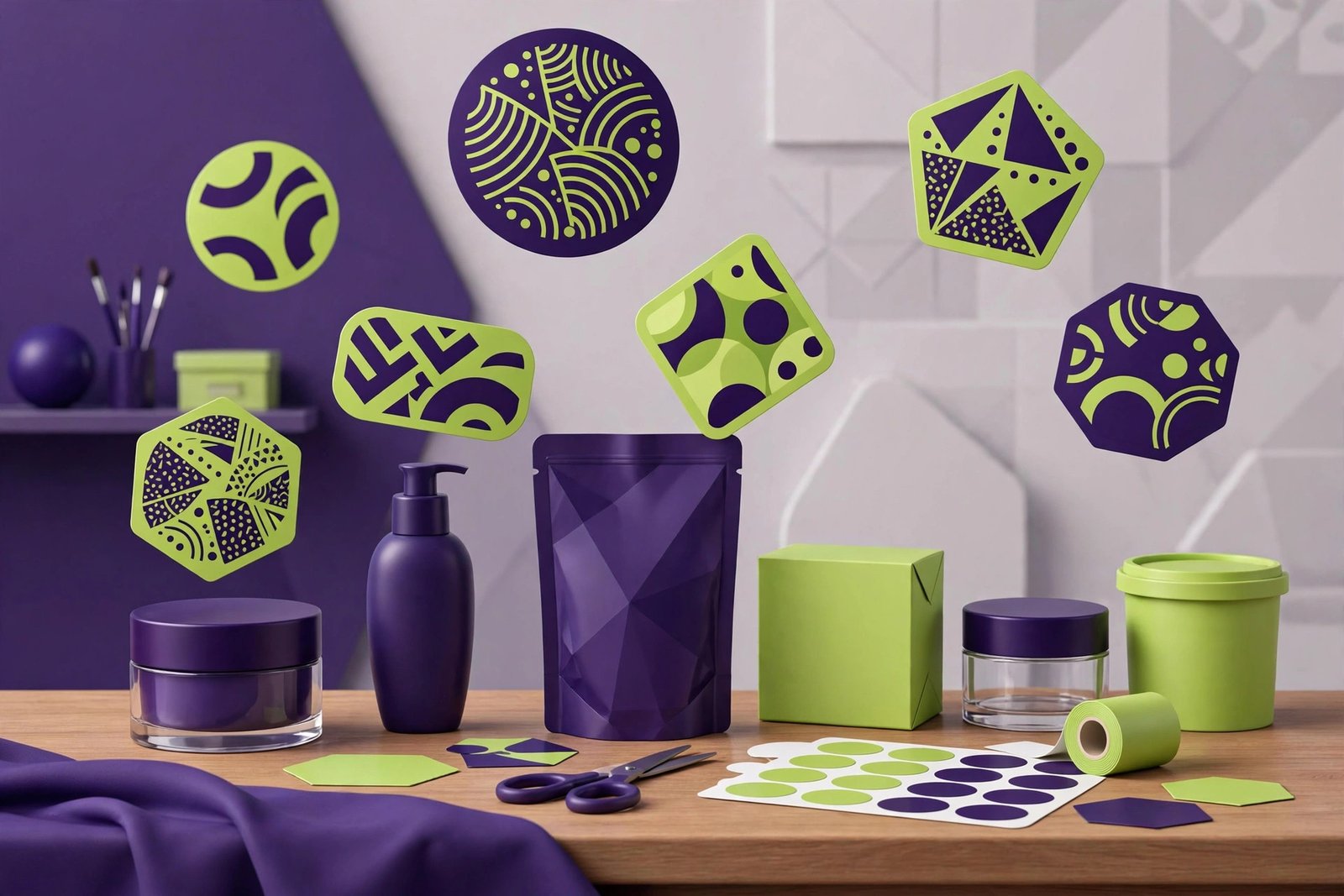
Pick up any product in a shop. What do you see first? The label. Before you read the price, before you check the weight, you see the label design. In those first seconds, you decide whether the product looks trustworthy, premium, cheap, or suspicious. That decision comes from label design.
A product label does two jobs. First, it shows product information: what it is, what is inside, how to use it, who made it. Second, it carries your brand identity: your logo, your colors, your style. When both jobs are done well, the label sells the product. When done badly, even a great product struggles.
Sialkot is a manufacturing city. Surgical instruments. Sports goods. Leather products. Food items. Cosmetics. Garments. Thousands of products leave Sialkot factories every day. Each one needs a label. At Advert Solutions, we design product labels for manufacturers and brands: labels that present product information clearly and keep brand identity consistent across every product.
This guide covers everything about label designing in Sialkot. Why labels matter. The types of labels. What goes on a label. Our design process. Materials and printing. What to check before ordering. Pricing. And the mistakes that make labels fail.
Why Product Labels Matter So Much
A label is your salesperson on the shelf. You are not there when a customer picks up your product. Your label speaks for you. Let us look at what a good label does.
First, it creates the first impression. Customers judge products by their labels. A clean, professional label suggests a quality product inside. A messy, blurry label suggests the opposite. This judgment happens in seconds and is hard to reverse. You can have the best surgical instruments in Sialkot, but if your packaging label looks amateur, buyers doubt the quality. Perception becomes reality.
Second, it builds brand recognition. When all your products share the same label style, customers start recognizing your brand instantly. Same logo placement. Same colors. Same fonts. This consistency is powerful. A customer who had a good experience with one of your products will pick up another product with the same label style. Without consistent labels, each product starts from zero. With them, every product benefits from the reputation of the others.
Third, it communicates trust through information. A label with clear ingredients, proper usage instructions, manufacturing details, and contact information tells customers you have nothing to hide. A label with missing or vague information raises suspicion. In food, cosmetics, and pharmaceuticals, this trust is everything. Customers put these products in their bodies. They need to trust what they read.
Fourth, it meets legal requirements. Many products must display specific information by law. Ingredients. Net weight. Manufacturing and expiry dates. Batch numbers. Manufacturer address. Warnings. Barcodes. A label missing required information can cause real problems: rejected shipments, fines, or products pulled from shelves. Professional label design includes planning for all required elements from the start.
Fifth, it differentiates you from competitors. Walk down any aisle. Dozens of similar products. Similar prices. Similar claims. What makes a customer choose yours? Often, the label. A distinctive, attractive label stands out in a sea of sameness. It gives customers a reason to pick yours first. Once they try it and like it, the label did its job.
For Sialkot manufacturers selling to international buyers, labels matter even more. Export buyers inspect packaging carefully. They check label quality as a proxy for overall quality control. A buyer choosing between two similar factories will notice which one has professional labels. It signals attention to detail. It signals that you understand branding, not just production. In competitive export markets, these signals win orders.
For new brands launching in Pakistan, the label is often the biggest design investment. More than the website. More than social media. Because the label is on every single unit sold. It is the most-seen piece of branding you own. Getting it right from the start saves expensive redesigns later.
The bottom line is simple. Your label works harder than almost any other marketing material. It is on every product. It is seen by every customer. It never takes a day off. Design it like it matters, because it does.
Types of Product Labels We Design
Different products need different labels. The design, size, material, and information all change. Here are the main types we design for Sialkot manufacturers and brands.
Food product labels. Spices, snacks, beverages, honey, oils, packaged foods. Food labels must show ingredients, nutritional information, net weight, manufacturing and expiry dates, storage instructions, and manufacturer details. The design must look appetizing. Colors should suggest freshness and flavor. We organize the required information so it is complete but not cluttered. Food labels also need to consider moisture and handling, so we design with appropriate materials in mind.
Cosmetic and personal care labels. Creams, soaps, shampoos, oils, perfumes. These labels must look premium. Beauty is an emotional purchase. The label design creates the feeling of luxury, purity, or natural goodness. Required information includes ingredients, usage directions, warnings, net quantity, and manufacturing details. We balance the beauty of the design with the density of required text. Small containers are a special challenge: a 30ml bottle needs the same information as a 200ml bottle in a fraction of the space.
Garment labels and hang tags. Sialkot's garment industry needs woven labels, printed labels, and hang tags. Woven labels go inside the neck or side seam. They show brand name, size, and care instructions. Hang tags attach to the product with a string. They carry branding, pricing, and product stories. We design both. For woven labels, designs must be simplified because weaving cannot reproduce fine details. For hang tags, we create designs that make the product look premium on the rack. If you need the T-shirt graphics too, see our T-shirt designing guide.
Pharmaceutical and healthcare labels. Medicines, supplements, herbal products, medical devices. These labels have the strictest requirements. Dosage. Active ingredients. Warnings. Batch numbers. Expiry dates. Regulatory marks. The design must prioritize clarity and accuracy above all else. There is no room for creative ambiguity. We design these with extreme care, organizing critical information in a clear hierarchy.
Surgical instruments packaging labels. Sialkot's signature industry. Instrument sets, pouches, and boxes need labels showing the manufacturer brand, product codes, sterilization indicators, and compliance marks like CE. Export buyers expect professional labeling. We design labels that meet international expectations and match the quality of the instruments inside.
Sports goods labels and branding. Footballs, gloves, bats, and gear need brand labels, size markings, and care instructions. Sports branding is bold and energetic. We design labels and hang tags that match the athletic spirit of the products. For complete sports brand identity, we coordinate with logo design so everything matches.
Industrial and chemical labels. Lubricants, adhesives, cleaning products, agricultural chemicals. These labels must include hazard warnings, safety instructions, and handling directions. Clarity can be a safety issue, not just a marketing issue. We design these with unmistakable warning sections and clear instruction hierarchies.
Sticker labels and seals. Round seals for packaging. Tamper-evident stickers. Promotional stickers. QR code stickers linking to websites or videos. These small labels do specific jobs. We design them to be readable at small sizes with bold, simple graphics.
Private label designs for export. Many Sialkot manufacturers produce for foreign brands. The buyer provides brand guidelines. We design labels that follow those guidelines exactly while optimizing for local printing. We also help manufacturers develop their own brand labels for direct export. Having your own brand, with professional labels, opens higher-margin opportunities.
Each label type has its own rules, required elements, and design approach. Tell us your product, and we will design the right label for it.

What Goes on a Product Label: The Complete Anatomy
A product label has many elements. Missing any important one causes problems. Here is the complete anatomy of a professional product label.
Brand name and logo. The most prominent element. Your brand name should be instantly readable. Your logo should be sharp and correctly reproduced. This is the anchor of the label. Everything else supports it. If you do not have a professional logo yet, get one designed before the label. A label cannot look better than its logo.
Product name and variant. What is this specific product? "Premium Basmati Rice" is not enough if you sell three grades. Specify the variant. "Extra Long Grain, 5kg." Customers must identify the exact product without confusion.
Net quantity. Weight or volume. 500g. 1 liter. 30ml. This is legally required for most products. It must be clear and honest. Place it where customers expect to find it, usually near the bottom front.
Ingredients or contents. Listed in descending order of quantity for food and cosmetics. Must be accurate and complete. Use clear, readable text. Do not hide ingredients in tiny, blurry print. Transparency builds trust.
Usage instructions. How to use the product. How to store it. Any special handling. For food: cooking instructions. For cosmetics: application directions. For chemicals: safety procedures. Write instructions in simple language. Consider Urdu translations for products sold locally in Sialkot.
Manufacturing and expiry dates. When it was made. When it expires. Batch or lot number for traceability. These are often printed separately during production, so the label design must leave clear space for them. We always plan date-coding areas in our label layouts.
Manufacturer information. Your company name and address. Contact details. Website. This is legally required and builds accountability. Customers should be able to reach you. Include a phone number or WhatsApp for local products.
Barcode. The UPC or EAN barcode for retail scanning. Barcodes need a quiet zone: clear space around them with no text or graphics. They must be printed at the correct size and contrast to scan reliably. We plan barcode placement and sizing in every retail label design.
Certifications and marks. Halal certification for food. ISO marks for manufactured goods. CE for products sold in Europe. These marks build credibility. Place them visibly but do not let them clutter the design. We integrate certification marks cleanly into the layout.
Marketing elements. Taglines. Key benefits. "100% Natural." "Export Quality." Promotional badges. These sell the product. But they must be honest. False claims destroy trust and can cause legal trouble. We help you present real strengths attractively without exaggeration.
Design elements. Colors, patterns, imagery, and style that make the label attractive and on-brand. These wrap around all the information above. Good label design makes required information look beautiful instead of bureaucratic. That is the art.
When we design your label, we plan every element from the start. Nothing is squeezed in as an afterthought. The result is a label that is complete, compliant, and beautiful.
Our Label Design Process, Step by Step
Label design is detailed work. Many elements must fit in a small space. Our process ensures nothing is missed.
Step 1: Product and regulatory discovery. We learn about your product. What is it? Who buys it? Where is it sold: local shops, supermarkets, export? We ask about regulatory requirements. Food products need different information than garments. Export products need different marks than local ones. Getting this right at the start prevents redesigns later.
Step 2: Information collection. You provide all label content: product names, ingredients, instructions, company details, certifications, barcode numbers. We organize this into a content sheet. We check for completeness. Missing ingredients? Unclear instructions? We flag gaps before design starts. It is much easier to fix content now than after the design is done.
Step 3: Label size and shape planning. We confirm the exact label dimensions and the container shape. A label for a round jar wraps differently than one for a flat box. The design must account for curves, folds, and visible areas. We ask for the physical container or its exact measurements. Designing to wrong dimensions is a costly mistake we never make.
Step 4: Brand style development. We establish the visual style. Colors that match your brand. Typography that is readable at small sizes. Graphic elements that suggest your product's qualities. For new brands, we develop the label style from scratch. For existing brands, we match your current identity. Consistency across your product range is a key goal. All your labels should look like family.
Step 5: Layout design. Now we arrange everything. Brand prominent. Product name clear. Information organized in a logical hierarchy. Required elements placed correctly. Barcode with proper quiet zone. Date coding space reserved. This is like solving a puzzle: fitting maximum information into minimum space while keeping it beautiful and readable. It takes skill and patience.
Step 6: Material and print planning. We consider how the label will be printed and on what material. Paper labels for dry products. Waterproof vinyl or BOPP for products exposed to moisture. The design may need adjustments for the material. Metallic inks for premium effects. We plan for the real production method, not just the screen.
Step 7: Proofing and review. You review the label design carefully. We recommend printing a test proof at actual size. Check every word. Check every number. Check the barcode area. Check that required information is present. Label errors are expensive because they affect entire production runs. We encourage extreme care at this stage.
Step 8: Revisions. Based on your review, we revise. Adjust layouts. Fix text. Refine colors. We continue until you approve. For product ranges, we design the full family of labels together to ensure consistency.
Step 9: Print-ready delivery. We deliver files prepared for your label printer. Correct dimensions. Bleed included. Right color mode. Die-line alignment if the label has a custom shape. We can coordinate with your printer in Sialkot to ensure the files are exactly what they need.
The timeline for a single label design is three to five working days. A full product range with multiple labels takes longer. Regulatory review by your team may add time. Plan accordingly.
Label Materials and Printing: What You Should Know
The label material affects both the look and the durability. Here is a guide to common options.
Paper labels. The most economical option. Good for dry products: boxes, jars, bottles kept indoors. Available in matte, gloss, and textured finishes. Paper labels work well for food products, supplements, and general merchandise. Limitation: not waterproof. Do not use for products exposed to moisture.
BOPP labels. Biaxially Oriented Polypropylene. A plastic film that is waterproof, oil-resistant, and durable. The standard for cosmetics, personal care, beverages, and cleaning products. Available in white, clear, and metallic. Clear BOPP creates a premium no-label look on glass containers. Costs more than paper but lasts much longer.
Vinyl labels. Durable and waterproof. Good for outdoor products, chemical containers, and items handled roughly. Thicker than BOPP. Excellent for industrial labels that must survive harsh conditions.
Woven labels. For garments. Brand name woven into fabric. Permanent and premium feeling. Design must be simplified: no fine details, limited colors. Standard for clothing brands worldwide. Sialkot garment exporters use these extensively.
Hang tags. Cardboard tags attached with string or plastic fasteners. Carry branding, pricing, and product information. Thicker card stock with premium finishes: lamination, foil stamping, embossing. We design hang tags that make products look expensive on the rack.
Printing methods. Digital printing for short runs and variable data. Flexo and offset for large runs. The design preparation is similar, but large-run printing needs extra care with color consistency. We prepare files suitable for your run size and printing method.
Finishing touches. Lamination protects the label and adds feel: matte for elegance, gloss for vibrancy. Foil stamping adds metallic accents for premium products. Embossing creates raised textures. Spot UV highlights specific areas with gloss. These finishes take a label from good to exceptional. We recommend finishes based on your product positioning and budget.
Choosing the right material and finish is part of our service. We recommend options based on your product, budget, and brand positioning. The design and the material work together to create the final impression.
What to Check Before You Order Label Designs
Labels are long-term investments. You will print thousands. Use this checklist to get them right.
Check 1: Is all required information included? Go through the anatomy section above. Ingredients. Net quantity. Dates. Manufacturer details. Warnings. Certifications. Missing required information causes legal and commercial problems. Make a list. Check it twice. Have someone else check it too.
Check 2: Is the text accurate? Spelling. Numbers. Ingredient names. Contact details. Every word on a label will be printed thousands of times. An error multiplies across your entire production. Proofread carefully. Then proofread again. We recommend at least two people review label text independently.
Check 3: Will it work at actual size? Labels are small. Text that looks fine on a computer screen may be unreadable when printed. Always review a proof at actual size. Print it on paper. Hold the container. Can you read everything comfortably? If not, simplify.
Check 4: Does it match your brand? Your label should match your other materials: your logo, your packaging, your website, your social media. Consistent branding builds recognition. If your label looks like it belongs to a different company, something is wrong.
Check 5: Is the barcode correct? If you use barcodes, verify the number is correct and registered. Ensure the barcode has the required quiet zone. Test scan a proof before mass printing. A barcode that does not scan causes problems at every retail checkout.
Check 6: Have you considered the full product range? If you have multiple products, design the labels as a family. Same style. Same layout logic. Different colors or graphics to distinguish variants. Customers should recognize your brand across all products instantly. Designing the range together is cheaper and more consistent than designing one by one.
Check 7: Is the material right for the product? Paper labels on products exposed to water will fail. Check that your label material suits the product's environment. Discuss this with both your designer and your printer. We advise on material selection as part of our service.
Check 8: Do you have the source files? You will need to update labels: new variants, changed ingredients, updated certifications. Ensure you receive editable source files, not just print PDFs. Discuss file delivery upfront.
Label Design Pricing in Sialkot
Label design pricing depends on complexity, number of labels, and the product type. Here is what to expect.
Single product label. One label design for one product. Includes layout, information organization, and print-ready files. The price depends on the amount of information and design complexity. A simple sticker label costs less than a detailed food label with nutritional panels.
Product range labels. Multiple labels designed as a consistent family. Three, five, ten products sharing a design system. Priced per label with volume discounts. Designing as a range is more efficient than one-by-one orders, and the consistency is better.
Premium labels with special finishes. Labels designed for foil stamping, embossing, or special materials. These need extra design work to plan the finish effects. The result justifies the cost for premium positioned products.
Garment labels and hang tags. Woven label designs, printed neck labels, and hang tag sets. Often ordered together as a complete garment branding package. We offer package pricing for the full set.
Redesign of existing labels. Updating old labels with a fresh look while keeping brand recognition. Usually costs less than starting from scratch because the content structure exists. A smart investment for established products that look dated.
What affects the price? Information density is the biggest factor. A label with fifty required elements takes more layout work than a simple brand sticker. Regulatory complexity matters: pharmaceutical labels need more care than promotional stickers. The number of variants affects pricing. Revisions are included, but clear content upfront keeps projects smooth and economical.
Think long-term. A label design is used on thousands or millions of units. The design cost per unit is tiny. But the impact per unit is huge. Every customer sees it. Investing in professional label design is one of the highest-return decisions a manufacturer can make.
For an exact quote, contact us with your product details: product type, label size, number of variants, and timeline. Or call +92 371 4200173. We will give you a clear quote with no hidden charges.
Common Label Design Mistakes to Avoid
We have reviewed many product labels from Sialkot manufacturers. These mistakes appear repeatedly.
Mistake 1: Cluttered layout. Trying to fit everything in large text. The result is chaos. Use hierarchy. Big for brand. Medium for product name. Small for details. Give each element its proper importance.
Mistake 2: Unreadable small text. Ingredients in 4-point font that nobody can read. If text is too small to read, it might as well not be there. Simplify. Prioritize. Use the back panel for details.
Mistake 3: Inconsistent branding across products. Each product has a different style. Customers cannot tell they are from the same company. Design product ranges as a family from the start.
Mistake 4: Poor barcode placement. Barcodes squeezed into corners, wrapped around curves, or printed too small. They fail to scan. Plan barcode placement early with proper size and quiet zone.
Mistake 5: No space for date coding. Forgetting to leave room for manufacturing and expiry dates. Then dates get stamped over graphics, looking messy. Always reserve a clean date-coding area.
Mistake 6: Wrong material choice. Paper labels on wet products. Labels that peel, smear, or fade. Match the material to the product environment. Ask your designer and printer for advice.
Mistake 7: Copying competitor labels. Making your label look like the market leader's. This confuses customers and invites legal trouble. Be inspired by good design, but create your own identity.
Avoid these mistakes and your labels will outperform most products on the shelf. Professional design plus attention to detail wins.
Label Design for Sialkot Exporters: Meeting International Standards
Export is the lifeblood of Sialkot manufacturing. Your labels must meet the expectations of buyers in Europe, America, the Middle East, and beyond. Here is what international markets demand.
Language requirements. Export labels often need multiple languages. English is standard. European markets may require local languages: German, French, Spanish. Middle East markets need Arabic. We design multilingual labels with clean layouts that accommodate different text lengths. German words are long. Arabic reads right to left. Professional multilingual design handles these challenges gracefully.
Compliance marks. Different markets require different marks. CE marking for Europe. FDA compliance for American food and cosmetics. Halal certification for Muslim markets. Each mark has placement and size rules. We integrate these marks correctly, so your products clear customs and retail requirements without issues.
Buyer brand guidelines. Many Sialkot manufacturers produce private label goods for foreign brands. The buyer provides brand guidelines: exact colors, fonts, logo usage, layout rules. We follow these guidelines precisely. Color matching is critical. We work with Pantone references and CMYK builds to match brand colors accurately in local printing.
Cultural sensitivity. Imagery that works in Pakistan may not work elsewhere. Colors have different meanings in different cultures. Symbols can offend unintentionally. We review export label designs for cultural appropriateness in the target market. This care prevents embarrassing and costly mistakes.
Building your own export brand. The most profitable path is developing your own brand for export instead of only manufacturing for others. Your own brand means your own labels, your own identity, your own margins. We help Sialkot manufacturers create complete export brand identities: logo, labels, packaging, and catalogues. It is a bigger investment than single labels, but the returns transform the business.
Building Brand Consistency Across Your Product Range
Consistency is the secret weapon of strong brands. When customers see your products, they should instantly know they are yours. Here is how to build that consistency through label design.
Create a label system, not just labels. A system is a set of rules: logo placement, color usage, typography, layout grid, imagery style. Every product label follows these rules. New products slot into the system easily. We develop label systems for brands with multiple products, so every new launch automatically looks like family.
Use color coding for variants. Different flavors, sizes, or types need differentiation. Color coding is the answer. Same layout, different accent color per variant. Customers learn the system quickly. Blue is original. Green is mint. Red is spicy. This works for food, cosmetics, and many other categories.
Keep the brand block identical. The area with your logo and brand name should be identical across all products. Same size. Same position. Same treatment. This is the anchor customers recognize. Everything else can vary, but the brand block stays constant.
Extend consistency beyond labels. Your labels should match your packaging, your product catalogue, your website, and your social media. When a customer moves from your Instagram to your product to your website, the brand should feel like one continuous experience. We design across all these touchpoints for unified branding.
Document your brand guidelines. As your team grows, guidelines keep everyone aligned. We provide simple brand guideline sheets with new label systems: colors, fonts, logo usage, layout rules. Your future designers, printers, and marketers all work from the same playbook.
Consistency compounds over time. Each consistent product strengthens the brand. Each inconsistent one weakens it. Invest in the system once, benefit forever.
When to Redesign Your Labels
Labels do not last forever. Markets change. Brands evolve. Here are the signs it is time for a redesign.
Your labels look dated. Compare your labels with competitors on the shelf. If yours look old-fashioned, customers notice. Design trends move. A refresh every three to five years keeps you current.
You have added new products. New products designed separately from old ones create inconsistency. A range-wide redesign unifies everything under one modern system.
Regulations changed. New labeling requirements mean new layouts. Do not just squeeze new text into old designs. Redesign properly.
You are entering new markets. Export markets may need different languages, marks, or styles. A redesign for the new market is often smarter than forcing the old label to fit.
Sales are flat. Sometimes the product is fine but the packaging is tired. A label refresh can reignite interest without changing anything else. It is one of the cheapest ways to boost a mature product.
A redesign does not mean abandoning your brand. The best redesigns keep what customers love and improve the rest. Evolution, not revolution. Your customers stay comfortable while your brand moves forward with confidence.
Frequently Asked Questions About Label Designing in Sialkot
How long does label design take?
A single product label takes three to five working days. This includes content organization, design, your review, revisions, and print-ready files. Product ranges with multiple labels take longer. Complex regulated products like pharmaceuticals may need extra review rounds. Plan your timeline accordingly.
What information do I need to provide?
Provide your product name, ingredients or contents, net quantity, usage instructions, manufacturing details, certifications, barcode number, and brand assets like your logo. The more complete your content, the smoother the design process. We will flag any missing required information before design starts.
Can you design labels for export products?
Yes. We design labels for international markets, including compliance marks like CE, multilingual text, and buyer-specific brand guidelines. Sialkot exporters trust us with labels for Europe, America, the Middle East, and beyond. Tell us your target market and we will design accordingly.
Do you design garment labels and hang tags?
Yes. We design woven labels, printed neck labels, and hang tags for Sialkot garment manufacturers and brands. Woven label designs are simplified for the weaving process. Hang tags are designed as premium brand pieces. We offer package pricing for complete garment branding sets.
What is the difference between a label and packaging design?
A label is applied to a product or its container. Packaging design covers the entire box, pouch, or wrapper. Labels are smaller and more focused. Many products need both: a designed package plus detailed labels. We handle both, ensuring they work together as one brand presentation. For broader print materials, see our flyer designing guide and brochure design service.
Can you work with my existing brand identity?
Absolutely. We match your existing logo, colors, and style across all label designs. Brand consistency is a core principle of our work. If your brand identity needs refreshing first, we can help with that too through our logo design service.
Will my label work with my printer?
Yes. We prepare print-ready files to your printer's specifications: correct dimensions, bleed, color mode, and die-line alignment. We can coordinate directly with printing presses in Sialkot to ensure smooth production. Just share your printer's requirements with us.
How do you handle small text on tiny labels?
Small labels are a design challenge we handle regularly. We use clear hierarchy, prioritize essential information, and use the back panel or fold-out areas for details. We always proof at actual size to ensure readability. If information truly does not fit, we discuss options like QR codes linking to detailed information online.
Can you redesign my old labels?
Yes. We refresh outdated labels with modern designs while preserving brand recognition. We keep your core identity elements and improve layout, typography, and overall appeal. Many Sialkot manufacturers update labels every few years to stay competitive. A label refresh is one of the most cost-effective brand upgrades.
Get Labels That Sell Your Products
Your label is on every unit you sell. It is seen by every customer. It represents your brand when you cannot be there. Invest in it properly.
At Advert Solutions in Sialkot, we design product labels for manufacturers and brands across industries: food, cosmetics, garments, surgical instruments, sports goods, pharmaceuticals, and more. We handle the information planning, the brand consistency, the regulatory elements, and the print preparation. You get labels that are complete, compliant, and beautiful.
Ready to upgrade your product labels? Contact us today with your product details, or call +92 371 4200173. Tell us what you make, and we will design labels that make it sell.
We do this for businesses.
Get a free consultation — we'll map the fastest path for you.